What Heart-Led Healing Actually Means | Living Fully
Article Outline
▼Summary
▼What is Heart-Led Healing?
Heart-led healing is about creating a safe space for yourself to heal, where you can be met with compassion, understanding, and presence. It's an approach that values the body's wisdom and recognizes that healing is not just about fixing problems, but about being witnessed and held in a way that allows for true processing and growth.
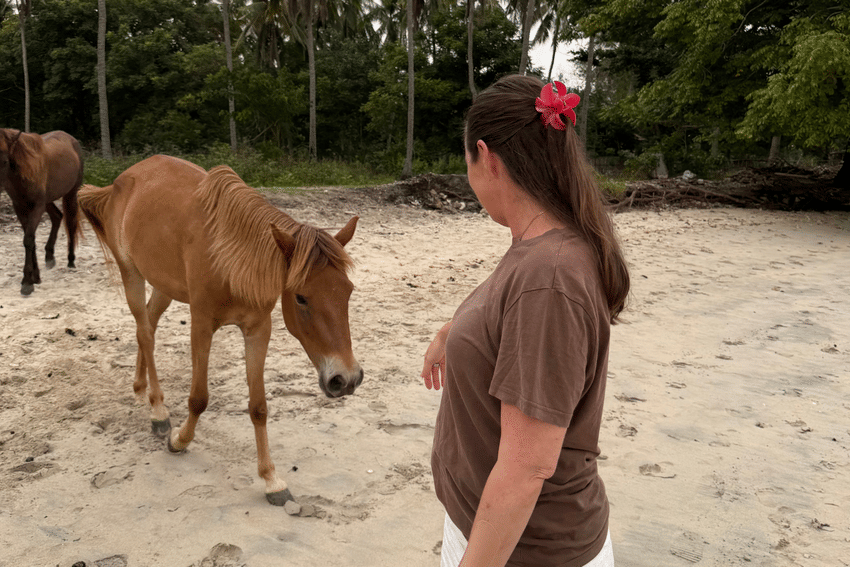
There is a moment that happens in almost every first appointment, whether we meet online or in person. A woman joins, often carrying far more than she has words for. Sometimes she has rehearsed what she wants to say. Sometimes she arrives already apologising for being emotional, overwhelmed, or “too much.” And then, somewhere within the first few minutes, something shifts. Her shoulders soften. Her breathing deepens. The urgency in her nervous system settles slightly. She is not doing anything differently in that moment. She is simply being met in a way her body recognizes as safe. Her body recognizes it before her mind does.
This moment is not coincidence, and it is not magic. It is one of the foundations of how I work at Life By Love. Heart-led healing sits at the core of my practice alongside functional medicine, mind body medicine, positive psychology, and personalized coaching. I am meeting clients online, sometimes in person. Heart-led healing is often spoken about as something soft or secondary, but in my experience it is the ground everything else stands on.
The way care is offered changes how healing is received. A nervous system that feels safe responds differently than one that feels rushed, judged, dismissed, or treated like a problem to be solved quickly. The same support can land completely differently depending on the relational environment in which it is given. Before the mind has fully processed what is happening, the body has already read the room. It notices the pace of someone’s voice, whether there is calm or urgency underneath their words, whether there is genuine listening or simply the appearance of listening.
And I have learned that my skill is not only in what I hear, but in how I listen. I listen beyond the words themselves. I listen for what is not yet spoken, for what sits underneath the language, for the quiet truth that often arrives before the sentence is fully formed. Nobody takes that time today. It is rare for someone to feel listened to at this depth, and many have never experienced it at all. But when someone is truly listened to like this, something in them often settles immediately, because they are no longer having to hold everything alone.
The difference between being held and being fixed
One of the hardest things about reproductive grief, birth trauma, fertility challenges, or the emotional weight carried silently in motherhood is that much of it cannot simply be fixed. Modern culture is deeply uncomfortable with pain that cannot be quickly resolved. People often rush toward advice because sitting beside someone’s grief without trying to change it feels unfamiliar and helpless. But some experiences are not asking for solutions in the beginning. They are asking for space. They are asking to be witnessed honestly without being minimized, reframed, or hurried toward meaning before the body is ready.
I have sat with couples after missed miscarriages where the room felt almost suspended in time. I have sat with women who still cannot speak about their birth experience years later without tears rising to the surface, despite everyone around them believing they should have moved on by now. I have sat with mothers grieving the realization that they will never have another child, while simultaneously feeling guilt for grieving at all because they love the children they already have so deeply. These moments have taught me that healing does not always move in straight lines. Sometimes grief changes shape over time, but it never fully leaves. Sometimes the most healing thing is not finding the perfect words or offering the perfect strategy. Sometimes it is simply being fully present without trying to take the pain away before it has been acknowledged.
This is something birth work has shown me again and again. A laboring woman does not need frantic energy around her. She does not need people trying to control every sensation or rush her through the process because discomfort makes others uneasy. She needs steadiness. She needs calm. She needs people who know how to stay grounded enough that her body can continue doing what it already knows how to do. Emotional healing often works the same way. The body softens when it no longer feels it has to defend itself. And many women have spent years, sometimes decades, bracing emotionally without even realizing they are doing it.
Heart led healing also means how you meet yourself
Over the years, I have also come to see that heart led healing is not only about how others hold you. It is equally about how you hold yourself. The way you speak to yourself when your body is not doing what you hoped it would do. The way you respond to yourself after birth did not unfold the way you imagined. The way you meet yourself after a hard day with your children, after another negative pregnancy test, after exhaustion has stripped away your patience or capacity. Many women live with an internal dialogue that is far harsher than anything they would ever say to someone they love.
The nervous system does not only respond to external environments. It responds to internal ones too. Self judgment creates tension inside the body just as criticism from the outside does. And so much of this work involves slowly learning another way of relating to yourself. Learning that needing support is not weakness. Learning that grief does not need to justify itself in order to deserve space. Learning that healing is not about becoming perfect, but about becoming safe enough inside yourself that your body no longer feels constantly at war.
This is one of the reasons my work is intentionally spacious. Why I do not rush sessions. Why I care deeply about how someone feels when they leave the room, not only about what was said during our time together. The support I offer is shaped by presence rather than urgency, by listening rather than fixing, and by staying with what is actually there long enough for it to be felt.
I think most people know this instinctively, even if they cannot fully explain it. We all know the feeling of leaving an interaction feeling more contracted inside ourselves, and we also know the feeling of leaving a room feeling slightly more like ourselves again. The body recognizes real care long before the mind has words for it.
Healing is not a solo project. It asks to be held, witnessed, and met with honesty and humanity. Not fixed.
And from that place, far more becomes possible than we often imagine.
With love,
Johanna